
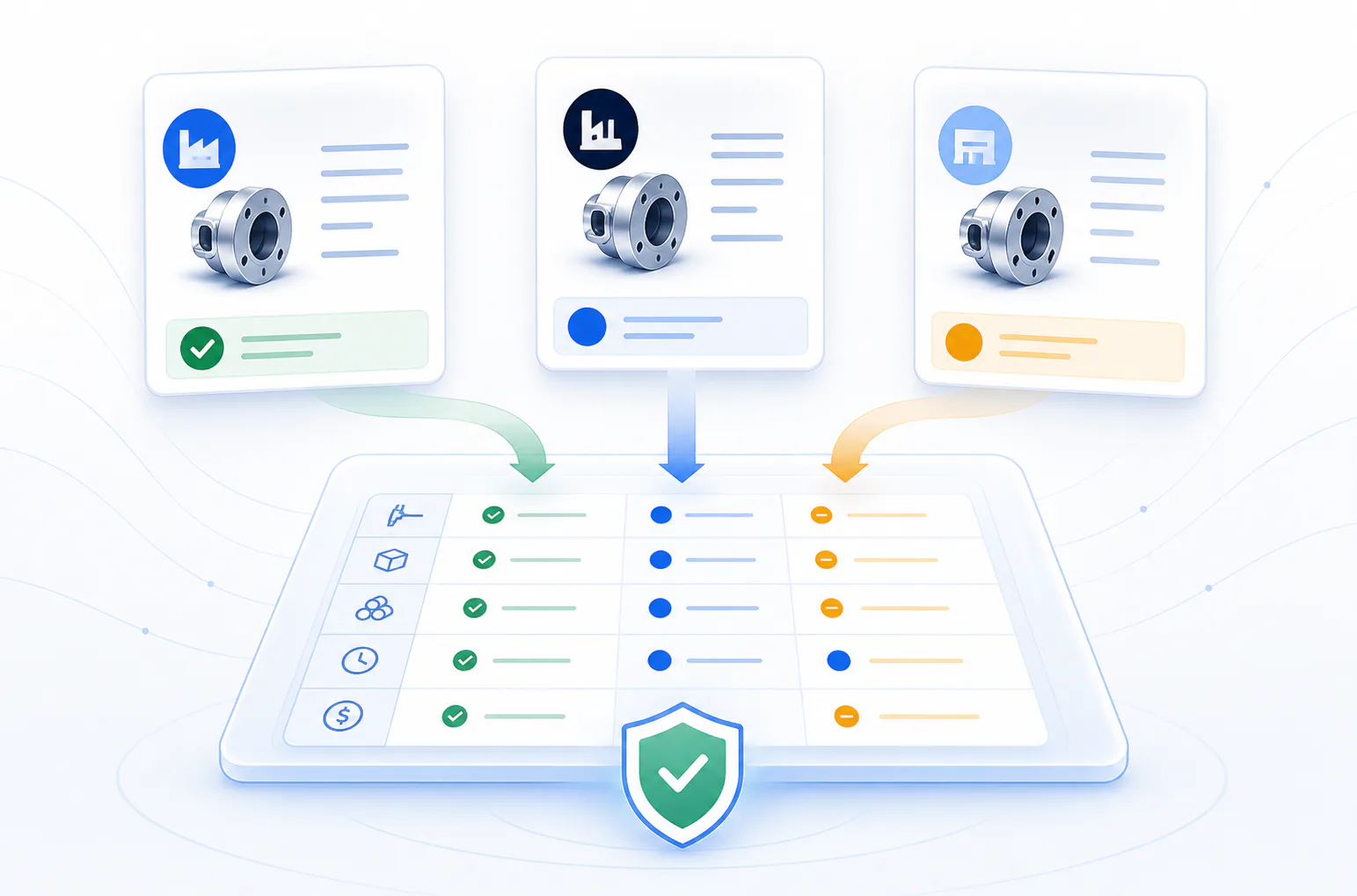
Why supplier offers cannot be compared by price alone
Two supplier offers may describe different materials, standards, quantities, delivery points or inclusions while appearing to answer the same line. The lowest visible price can become the most expensive option after freight, duty, missing accessories or technical rejection.
Normalize the comparison basis
Bring every offer to a consistent unit, currency and commercial basis. Separate supplier price from logistics and duty. Record validity, lead time and payment terms beside the technical match so reviewers can see the complete tradeoff.
Link every conclusion to evidence
A compliance statement should point to the supplier document and the customer requirement it answers. Evidence links make it possible to verify material, class, certification and delivery claims without reopening multiple files.
Surface exceptions instead of hiding them
A useful comparison highlights missing values, ambiguous language and deviations. It should never silently fill gaps. Reviewers need a short exception queue that focuses their attention on decisions that can change risk, margin or customer acceptance.
Build a line-by-line comparison checklist
For each requested line, capture the exact customer requirement, the offered item, quantity, unit, manufacturer, technical attributes and documentary evidence. Then compare delivery and commercial terms without mixing them into the technical conclusion.
- Requested versus offered description
- Material, rating, size and applicable standard
- Manufacturer and country of origin
- Certificates, datasheets and exclusions
- Unit price, currency and validity
- Lead time, availability and delivery basis
- Payment terms and warranty
- Clarifications or approvals still required
Separate compliance from commercial preference
The lowest-cost offer is not automatically the preferred offer, and the technically strongest offer is not automatically the best commercial choice. First determine whether an offer is compliant, noncompliant or unresolved. Then compare cost, lead time, terms and supplier context among the offers that remain viable.
When an alternative is considered, record the requested and offered values side by side. A named reviewer should decide whether the deviation can be presented to the customer.
Review the complete landed-cost basis
Supplier price is only one input. Currency conversion, freight, insurance, duty, clearance, handling and omitted accessories can change the ranking. Keep the original offer visible beside the normalized basis so a reviewer can see which assumptions were added.
If an input is unknown, mark it as an assumption and identify its owner. Do not allow a blank value to become zero without an explicit rule and review.