
What industrial distributor ERP and product data needs to accomplish
An ERP records transactions, while a product information management system organizes product content and attributes. Industrial distributors often need both, plus document repositories, supplier files and customer-specific cross-references that do not fit neatly into either system.
The main risk is not choosing the wrong acronym. It is allowing identifiers, units, attributes, prices and documents to diverge across systems. Every automation layer becomes less reliable when the underlying product and customer data lacks ownership.
A practical operating model
Define a source of truth for each data domain: item identity, commercial terms, inventory, supplier cross-reference, technical attributes and documents. Use stable identifiers and explicit synchronization rules instead of copying entire records between systems without ownership.
Prioritize the data needed for real workflows. Start with the attributes that drive search, quotation, purchasing and fulfillment, then add content that improves digital discovery or analytics. Assign stewardship and a correction process before pursuing large-scale enrichment.
Field note: quote data needs a system-of-record boundary
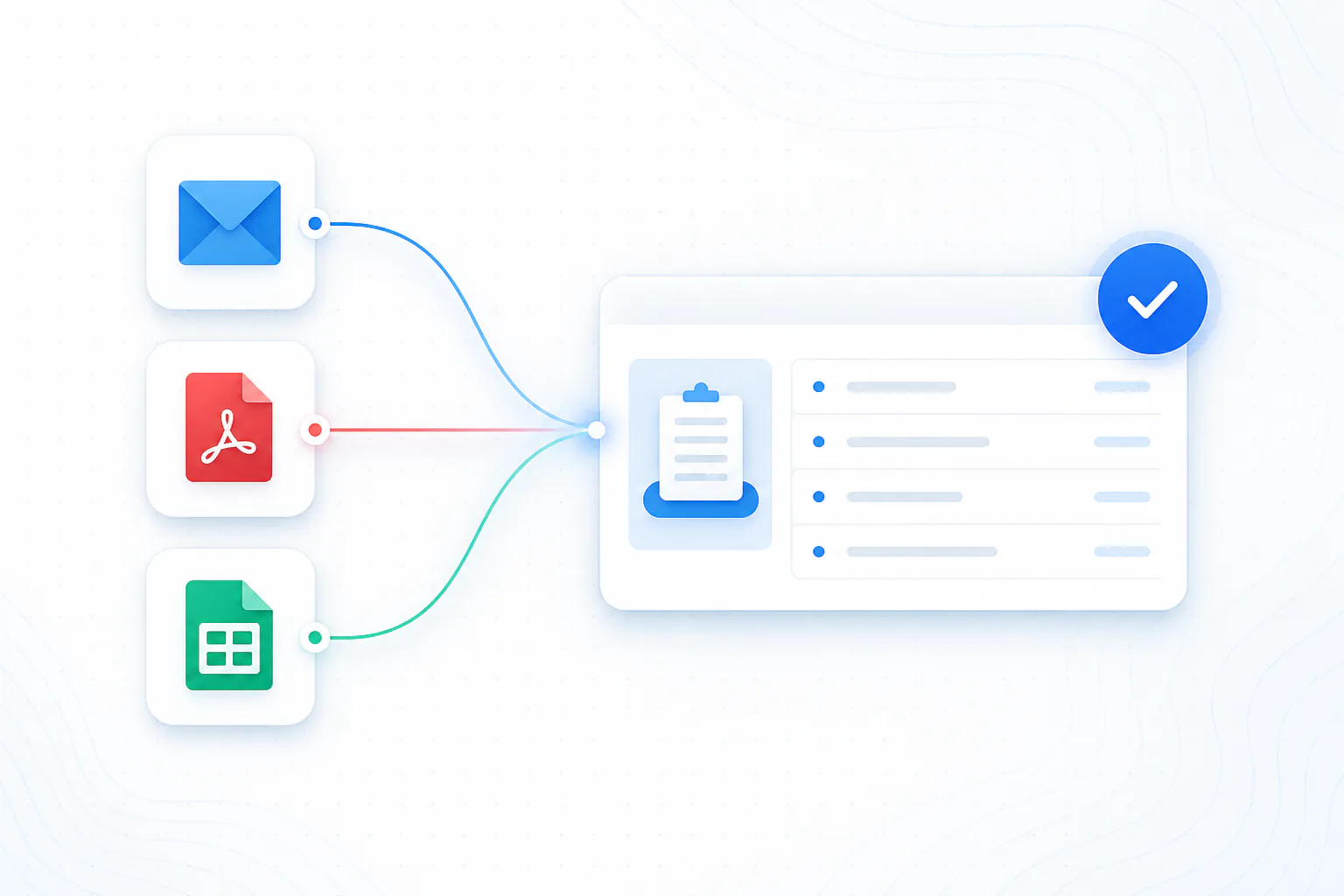
Quotation work often starts in email and spreadsheets even when the distributor has an ERP. The practical question is not whether every field can be integrated immediately. It is which system owns item identity, stock, customer terms and the final approved commercial record—and how unstructured evidence reaches those records without silent retyping.
Start with a one-way preparation flow. Extract and review the request, preserve the supplier evidence and produce an approved handoff that uses the ERP identifiers and units. Add writes only after the team can reconcile the prepared quote with the record created in the system of record.
- Owner of product and customer master data
- Mapping from customer language to item identity
- Authoritative stock and cost timestamp
- Approved fields permitted to enter the ERP
- Reconciliation and correction log after handoff
Controls that keep the process reliable
Controls should sit inside the workflow at the point where they change a decision. The aim is to make the important boundary visible without routing every routine action through the same approval queue.
- Data owner and authoritative system by field
- Unit and identifier governance
- Change history and approval
- Integration monitoring and reconciliation
Metrics worth reviewing
Use a balanced set of service, quality, financial and workflow measures. A faster process is only an improvement when it also protects the customer promise, technical result and commercial outcome.
- Duplicate and incomplete item records
- Cross-reference match rate
- Integration failures and stale records
- Corrections required during quote and order entry
Questions for an operating review
These questions help leaders move from a generic improvement objective to a specific decision about policy, ownership, data or system design.
- Which system owns each decision-critical field?
- How is the same product identified across suppliers and customers?
- What change must propagate immediately?
- How can users correct data without creating another shadow source?
What a strong outcome looks like
Reliable data reduces search time and prevents downstream correction, but governance must remain proportionate. A small set of trusted attributes used in daily work is more valuable than a large catalog filled with unowned or stale fields.
RFQ workflows are a practical way to discover data gaps because they reveal the identifiers, documents and attributes teams repeatedly reconstruct outside the core systems.