
Why approved equivalent product decisions needs a defined workflow
A supplier may describe an alternative as equivalent even when material, dimensions, standard, certification or operating range differs.
The objective is not to remove judgment from approved equivalent product decisions. It is to organize the evidence, calculations and unresolved questions so the right person can make a faster and better informed decision.
A practical operating method
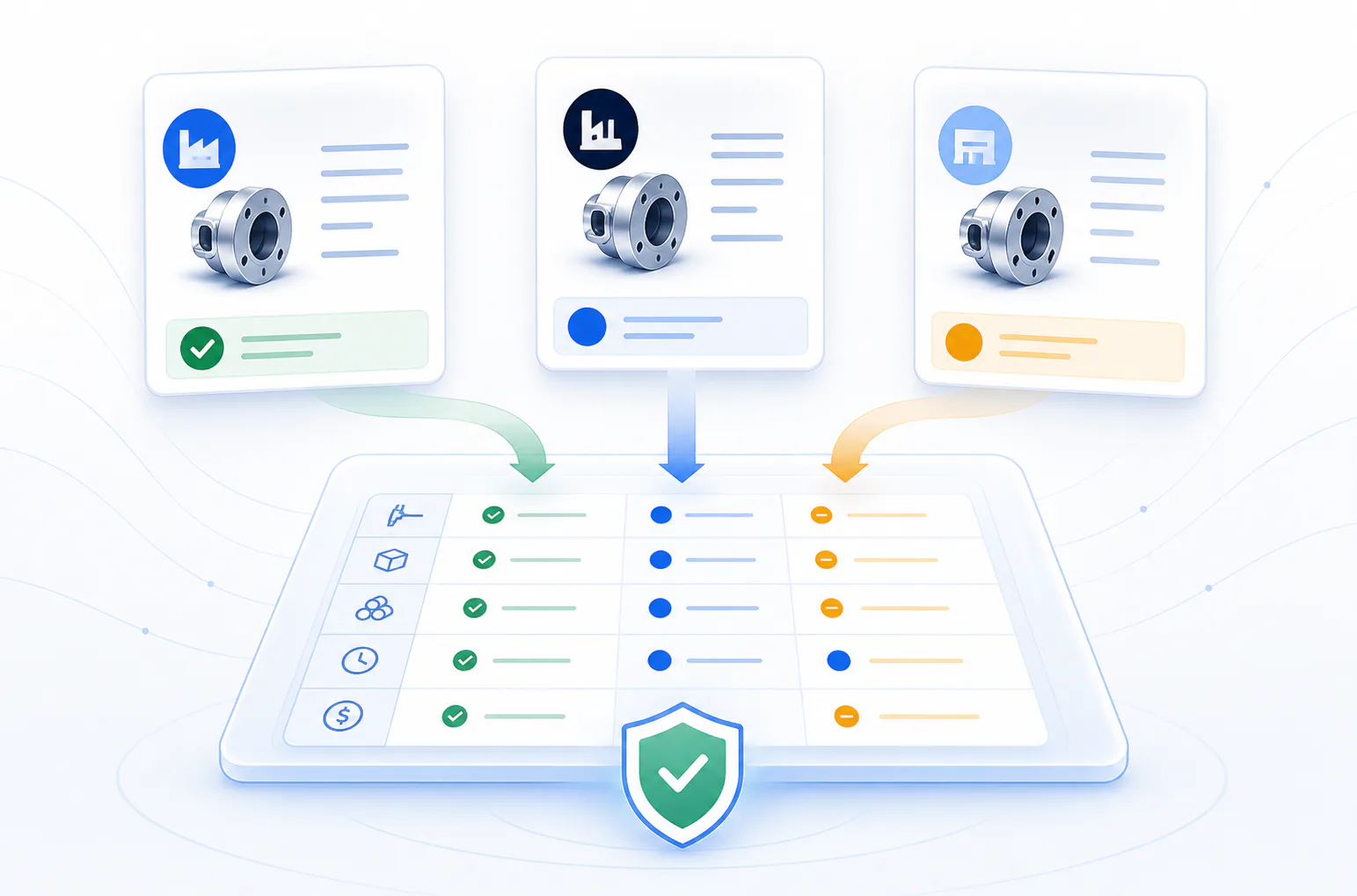
Compare requested and offered attributes side by side, attach supporting documents and route every material difference to a qualified reviewer.
Keep the original customer and supplier language beside every normalized field. When information conflicts or support is missing, show the exception instead of inventing an answer.
Controls to include
The workflow should make important controls visible at the moment they affect the quotation. These controls help reviewers distinguish routine preparation from decisions that create technical or commercial exposure.
- Requested and offered values
- Supplier evidence
- Deviation consequence
- Named human approver
What good implementation looks like
Equivalent decisions become transparent technical judgments rather than unsupported catalog matches.
Test the approach with cases the team already understands. Review the evidence, corrections and decision quality before connecting live systems or expanding external actions.
Questions for the operating review
A useful review of approved equivalent product decisions should focus on the decisions the workflow supports, the evidence available to the reviewer and the consequence of an unresolved exception.
- How is requested and offered values verified, owned and recorded?
- How is supplier evidence verified, owned and recorded?
- How is deviation consequence verified, owned and recorded?
- How is named human approver verified, owned and recorded?
How to measure improvement
Measure whether the new method produces equivalent decisions become transparent technical judgments rather than unsupported catalog matches.
Pair preparation speed with correction load, missing evidence, exception quality and reviewer confidence. The process is improving only when the team reaches a sound decision with less reconstruction and no hidden increase in technical or commercial risk.